Before the Mexican Revolution, at the De la Garza ranch
Tita’s Tearful Birth
Before [Tita](entity:character-recall-character-tita-10eebe4d37c8) was born, her sobs were so loud inside her great-grandmother’s womb that [Nacha](entity:character-recall-character-nacha-fefc94cc5749) could hear them. The crying brought on premature labor, and Tita entered the world on the kitchen table amid the smells of cooking, already weeping.
Tita’s infancy and early childhood
A Childhood in the Kitchen
When [Tita](entity:character-recall-character-tita-10eebe4d37c8) was two days old, her father died and [Mama Elena](entity:character-recall-character-mama-elena-a3fe87157aed)’s milk dried up from shock. [Nacha](entity:character-recall-character-nacha-fefc94cc5749) took over feeding the infant, and the kitchen became Tita’s home and her first education in the world.
When Tita is fifteen
The Youngest Daughter’s Fate
As the youngest daughter, [Tita](entity:character-recall-character-tita-10eebe4d37c8) learns that family custom requires her to remain unmarried and care for [Mama Elena](entity:character-recall-character-mama-elena-a3fe87157aed) until her mother dies. She questions the fairness of the rule, but Mama Elena shuts down her protest and insists that no daughter may challenge it.
Shortly before Tita’s sixteenth birthday
Pedro’s Proposal Is Rejected
[Tita](entity:character-recall-character-tita-10eebe4d37c8) tells [Mama Elena](entity:character-recall-character-mama-elena-a3fe87157aed) that [Pedro Muzquiz](entity:character-recall-character-pedro-muzquiz-929c42869224) wants to speak with her, hoping to marry. Mama Elena refuses before he can ask, explaining that Tita must serve her for life under the family tradition.
The day Pedro Muzquiz visits the ranch
Pedro Chooses Rosaura
[Pedro](entity:character-recall-character-pedro-252c9738bb08) arrives with his father to request [Tita](entity:character-recall-character-tita-10eebe4d37c8)’s hand. [Mama Elena](entity:character-recall-character-mama-elena-a3fe87157aed) instead offers him [Rosaura](entity:character-recall-character-rosaura-c8ff9ea985fb), who is available to marry, and Pedro accepts the alternative because marriage to Tita has been forbidden and he believes it is the only way to stay near her.
The previous Christmas
Pedro Declares His Love
[Tita](entity:character-recall-character-tita-10eebe4d37c8) remembers the night [Pedro](entity:character-recall-character-pedro-252c9738bb08) first confessed his love after their hands touched in the kitchen. She told him she felt the same, and he pledged that his love would last forever.
The night after Pedro agrees to marry Rosaura
Tita’s Endless Cold
[Tita](entity:character-recall-character-tita-10eebe4d37c8) understands that [Pedro](entity:character-recall-character-pedro-252c9738bb08) will marry her sister, despite the love he has promised her. She tries to comfort herself with a [Christmas](entity:time-recall-time-christmas-a573265d0167) roll, but grief leaves her hollow and cold; she spends the night knitting the bedspread and weeping.
January, before Pedro and Rosaura’s wedding
The Wedding Preparations
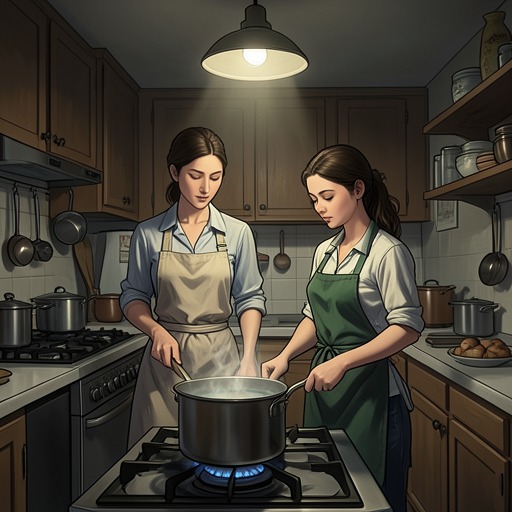
[Mama Elena](entity:character-recall-character-mama-elena-a3fe87157aed) punishes [Tita](entity:character-recall-character-tita-10eebe4d37c8) for resisting the engagement by putting her in charge of the wedding preparations. Tita and [Nacha](entity:character-recall-character-nacha-fefc94cc5749) prepare an enormous banquet, including a cake made with 170 eggs, while Tita struggles to hide her pain.
January, at Pedro and Rosaura’s wedding
The Wedding Cake’s Enchanted Effect
[Tita](entity:character-recall-character-tita-10eebe4d37c8)’s tears fall into the wedding cake batter, carrying her grief into the food. As the guests eat, they are overwhelmed by longing and heartbreak, then by nausea and vomiting; Tita alone escapes the strange effect.
The day after the wedding
Nacha’s Death
After helping [Tita](entity:character-recall-character-tita-10eebe4d37c8) finish the cake, [Nacha](entity:character-recall-character-nacha-fefc94cc5749) is overcome by memories of the wedding she never had. Tita finds her dead with a photograph of her former fiancé in her hands, losing the person who had been closest to her.
The night of the wedding reception
A Punishment After the Banquet
[Mama Elena](entity:character-recall-character-mama-elena-a3fe87157aed) believes [Tita](entity:character-recall-character-tita-10eebe4d37c8) and [Nacha](entity:character-recall-character-nacha-fefc94cc5749) deliberately poisoned the wedding cake and beats Tita so severely that she spends two weeks recovering. Tita cannot convince her mother that the cake’s only extra ingredient was her own grief-stricken tears.
March, after Tita becomes the ranch cook
Roses from Pedro
After [Nacha](entity:character-recall-character-nacha-fefc94cc5749)’s death, [Tita](entity:character-recall-character-tita-10eebe4d37c8) takes over the kitchen. [Pedro](entity:character-recall-character-pedro-252c9738bb08) gives her roses to mark her first year as cook, but [Mama Elena](entity:character-recall-character-mama-elena-a3fe87157aed) orders her to dispose of them, while [Rosaura](entity:character-recall-character-rosaura-c8ff9ea985fb) reacts with jealousy.
March, during a family dinner
The Rose Petal Quail
Unable to throw away [Pedro](entity:character-recall-character-pedro-252c9738bb08)’s flowers, [Tita](entity:character-recall-character-tita-10eebe4d37c8) uses them to adapt a recipe for quail. The meal transmits her desire to Pedro through its taste, while [Gertrudis](entity:character-recall-character-gertrudis-ef05946b8b01) absorbs the dish’s heat as an overwhelming erotic force.
That same evening in March
Gertrudis and Juan
[Gertrudis](entity:character-recall-character-gertrudis-ef05946b8b01) rushes to the outdoor shower, but the heat radiating from her body makes the wooden enclosure catch fire. Naked and aflame with desire, she runs into the field, where [Juan Alejandrez](entity:character-recall-character-juan-alejandrez-728c157bfdaa) carries her off on horseback.
After Gertrudis leaves the ranch
The Secret Tita Keeps
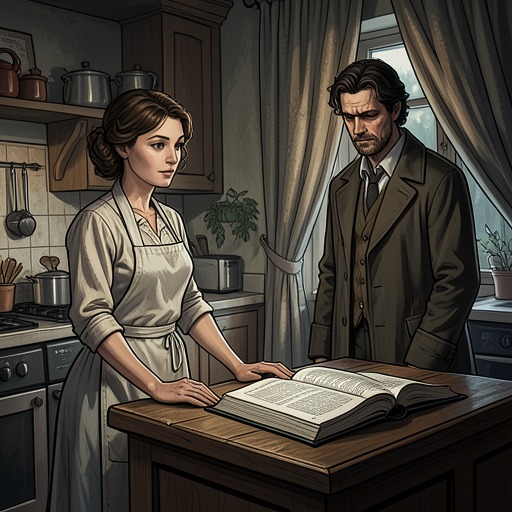
[Tita](entity:character-recall-character-tita-10eebe4d37c8) watches [Gertrudis](entity:character-recall-character-gertrudis-ef05946b8b01) ride away and feels the ache of her own thwarted love for [Pedro](entity:character-recall-character-pedro-252c9738bb08). She begins writing recipes in a cookbook, recording the extraordinary events that food and desire have set in motion.
Soon after Gertrudis’s escape
Roberto’s Birth
While [Mama Elena](entity:character-recall-character-mama-elena-a3fe87157aed) and [Chencha](entity:character-recall-character-chencha-5768adbb8cff) are away and [Pedro](entity:character-recall-character-pedro-252c9738bb08) is detained by federal troops, [Tita](entity:character-recall-character-tita-10eebe4d37c8) is left alone to assist [Rosaura](entity:character-recall-character-rosaura-c8ff9ea985fb)’s difficult labor. She delivers [Roberto](entity:character-recall-character-roberto-951125a95b43) and, guided by [Nacha](entity:character-recall-character-nacha-fefc94cc5749)’s remembered instructions, cares for the newborn.
The days after Roberto’s birth
Tita Nurses Roberto
When the wet nurse dies and [Roberto](entity:character-recall-character-roberto-951125a95b43) refuses other food, [Tita](entity:character-recall-character-tita-10eebe4d37c8) offers him her breast despite believing she has no milk. Milk appears, and she secretly nurses the child with [Pedro](entity:character-recall-character-pedro-252c9738bb08)’s help, forming a powerful bond with her nephew.
After Roberto’s baptism
The Family Moves to San Antonio
[Mama Elena](entity:character-recall-character-mama-elena-a3fe87157aed) decides that [Rosaura](entity:character-recall-character-rosaura-c8ff9ea985fb), [Pedro](entity:character-recall-character-pedro-252c9738bb08), and [Roberto](entity:character-recall-character-roberto-951125a95b43) should move to San Antonio, ostensibly to secure better medical care. [Tita](entity:character-recall-character-tita-10eebe4d37c8) realizes that she is losing the child she has cared for as her own, while Pedro and Rosaura leave the ranch with him.
During the revolutionary period, after the family leaves
The Revolutionaries Visit
A troop of revolutionaries reaches the ranch, where [Mama Elena](entity:character-recall-character-mama-elena-a3fe87157aed) confronts its captain with a shotgun and prevents the soldiers from entering her house. They take the doves from the roof, and [Tita](entity:character-recall-character-tita-10eebe4d37c8) finds one surviving squab in the emptied dovecote.
After Roberto’s death
Tita’s Breakdown
When news arrives that [Roberto](entity:character-recall-character-roberto-951125a95b43) has died, [Tita](entity:character-recall-character-tita-10eebe4d37c8) collapses into grief and accuses [Mama Elena](entity:character-recall-character-mama-elena-a3fe87157aed) of causing his death. After Mama Elena strikes her, Tita retreats to the dovecote and becomes silent and withdrawn.
The day after Tita’s breakdown
John Takes Tita Away
Dr. [John Brown](entity:character-recall-character-john-brown-0ac26e98a333) finds [Tita](entity:character-recall-character-tita-10eebe4d37c8) in the dovecote, injured and unable to respond to the people around her. Rather than send her to an asylum, he takes her to his own home, where he cares for her and gives her time to recover.
During Tita’s recovery at John Brown’s house
Morning Light’s Legacy
In John’s laboratory, [Tita](entity:character-recall-character-tita-10eebe4d37c8) encounters the memory of his grandmother [Morning Light](entity:character-recall-character-morning-light-6ffa1e814cfc), a Kikapu healer who had taught him about plants and healing. John explains her idea that people carry an inner box of matches, kindled by love, food, music, touch, or words.
Several months into her stay with John
Tita Breaks Her Silence
John invites [Tita](entity:character-recall-character-tita-10eebe4d37c8) to write the reason for her silence on a laboratory wall, and she writes that she does not want to speak. The act becomes her first deliberate step toward choosing for herself, rather than obeying someone else’s command.
About three months later
Soup Restores Tita
[Chencha](entity:character-recall-character-chencha-5768adbb8cff) brings ox-tail soup to John’s house, and its familiar taste and smells bring [Tita](entity:character-recall-character-tita-10eebe4d37c8) back into contact with her memories of [Nacha](entity:character-recall-character-nacha-fefc94cc5749) and the ranch kitchen. Tita begins to cry and speaks again, while the soup reconnects her to life and to cooking.
During Tita’s recovery
Gertrudis Writes to Tita
[Chencha](entity:character-recall-character-chencha-5768adbb8cff) delivers a letter from [Gertrudis](entity:character-recall-character-gertrudis-ef05946b8b01), who says she has left the brothel and is searching for where she belongs. She describes the intensity of her encounter with Juan and says she hopes to find him again.
After bandits attack the ranch
Tita Returns to the Ranch
Bandits rape [Chencha](entity:character-recall-character-chencha-5768adbb8cff), and [Mama Elena](entity:character-recall-character-mama-elena-a3fe87157aed) is struck in the spine while defending herself, leaving her paralyzed. [Tita](entity:character-recall-character-tita-10eebe4d37c8) returns to care for her mother, though their relationship remains marked by resentment and estrangement.
Soon after Tita returns
The Soup Is Rejected
[Tita](entity:character-recall-character-tita-10eebe4d37c8) prepares ox-tail soup for [Mama Elena](entity:character-recall-character-mama-elena-a3fe87157aed), hoping to comfort her, but her mother spits it out and calls it bitter. Mama Elena suspects that Tita is poisoning her, turning a gesture of care into a fresh source of conflict.
During Tita’s return to the ranch
John Proposes to Tita
John tells [Mama Elena](entity:character-recall-character-mama-elena-a3fe87157aed) that he intends to ask for [Tita](entity:character-recall-character-tita-10eebe4d37c8)’s hand, despite the family rule. He later proposes directly to Tita, offering her a life of respect and affection beyond the control of her mother.
Within a month of Tita’s return
Mama Elena’s Death
[Mama Elena](entity:character-recall-character-mama-elena-a3fe87157aed) secretly takes strong purgatives because she believes that [Tita](entity:character-recall-character-tita-10eebe4d37c8) is poisoning her food. Their use contributes to her painful death, leaving Tita to grieve not only the mother who oppressed her but the person whose own love had been thwarted.
After Mama Elena’s funeral
The Letters Reveal a Secret
While preparing [Mama Elena](entity:character-recall-character-mama-elena-a3fe87157aed)’s body, [Tita](entity:character-recall-character-tita-10eebe4d37c8) finds a small key and opens her mother’s hidden box. The letters inside reveal that Mama Elena loved [Jose Trevino](entity:character-recall-character-jose-trevino-e0b0472deb3e), was forced into marriage with Juan De la Garza, and had a secret relationship that made [Gertrudis](entity:character-recall-character-gertrudis-ef05946b8b01) Jose’s daughter.
At Mama Elena’s funeral
Pedro Returns to the Ranch
[Pedro](entity:character-recall-character-pedro-252c9738bb08) and [Rosaura](entity:character-recall-character-rosaura-c8ff9ea985fb) come to the funeral, and [Tita](entity:character-recall-character-tita-10eebe4d37c8)’s feelings for Pedro revive when he embraces her. She recognizes his earlier abandonment and tries to show that she has a bond with John, while Pedro grows jealous at the sight of them together.
Some months after Mama Elena’s death
Esperanza Is Born
[Rosaura](entity:character-recall-character-rosaura-c8ff9ea985fb) gives birth prematurely to [Esperanza](entity:character-recall-character-esperanza-7e0590e3f4ea), and John has to perform an emergency operation that leaves Rosaura unable to have more children. Because Esperanza is the youngest daughter, [Tita](entity:character-recall-character-tita-10eebe4d37c8) fears that Rosaura will impose the same life-denying duty that was imposed on her.
After Esperanza’s birth
Tita Agrees to Marry John
[Tita](entity:character-recall-character-tita-10eebe4d37c8) prepares to marry John and begins to imagine a life outside the ranch. She is grateful for his steadiness and care, but the return of [Pedro](entity:character-recall-character-pedro-252c9738bb08) and the closeness of their old love leave her uncertain about what she wants.
During the summer after Tita’s return
Pedro and Tita’s First Encounter
One night, while the family sleeps outdoors in hammocks, [Pedro](entity:character-recall-character-pedro-252c9738bb08) follows [Tita](entity:character-recall-character-tita-10eebe4d37c8) through the dark and kisses her. They touch each other secretly, but [Mama Elena](entity:character-recall-character-mama-elena-a3fe87157aed) calls for Tita and interrupts them before their desire can go further.
Around Three Kings’ Day
Tita Suspects Pregnancy
While preparing [Three Kings’ bread](entity:object-recall-object-three-kings-bread-320493e581d5), [Tita](entity:character-recall-character-tita-10eebe4d37c8) suspects that she is pregnant by [Pedro](entity:character-recall-character-pedro-252c9738bb08) and considers how to tell John and what the consequences might be. She fears both social judgment and the return of [Mama Elena](entity:character-recall-character-mama-elena-a3fe87157aed)’s condemnation.
During the Three Kings’ Day gathering
Mama Elena’s Ghost Returns
[Mama Elena](entity:character-recall-character-mama-elena-a3fe87157aed)’s ghost confronts [Tita](entity:character-recall-character-tita-10eebe4d37c8) and curses her and the child she believes Tita carries. The apparition intensifies Tita’s fear and shame, while the family gathering makes her private crisis harder to escape.
The evening of the Three Kings’ bread celebration
Gertrudis Returns as a General
[Gertrudis](entity:character-recall-character-gertrudis-ef05946b8b01) arrives at the ranch with Juan and a troop of revolutionary soldiers. She has become a general, and her return gives [Tita](entity:character-recall-character-tita-10eebe4d37c8) the chance to reconnect with the sister who once escaped the family’s restraints.
During Gertrudis’s return visit
Gertrudis Learns the Family Secret
[Gertrudis](entity:character-recall-character-gertrudis-ef05946b8b01) learns that [Mama Elena](entity:character-recall-character-mama-elena-a3fe87157aed) has died and grieves that she cannot show her mother what she has made of her life. [Tita](entity:character-recall-character-tita-10eebe4d37c8) keeps the truth about Gertrudis’s parentage private for the time being, protecting the secret revealed by the letters.
The day before Gertrudis leaves again
Tita Confides in Gertrudis
[Tita](entity:character-recall-character-tita-10eebe4d37c8) tells [Gertrudis](entity:character-recall-character-gertrudis-ef05946b8b01) that she may be pregnant and admits her continuing love for [Pedro](entity:character-recall-character-pedro-252c9738bb08). Gertrudis urges her to stop treating love as a shameful secret and to speak honestly about what she wants.
That same afternoon
Tita Tells Pedro
At [Gertrudis](entity:character-recall-character-gertrudis-ef05946b8b01)’s urging, [Pedro](entity:character-recall-character-pedro-252c9738bb08) overhears that [Tita](entity:character-recall-character-tita-10eebe4d37c8) is expecting his child. He welcomes the possibility and proposes that they leave together, but Tita insists that [Rosaura](entity:character-recall-character-rosaura-c8ff9ea985fb) and [Esperanza](entity:character-recall-character-esperanza-7e0590e3f4ea) must also be considered.
The night before John is due to return
Tita’s False Pregnancy Scare
[Tita](entity:character-recall-character-tita-10eebe4d37c8) confronts [Mama Elena](entity:character-recall-character-mama-elena-a3fe87157aed)’s ghost and declares that she has the right to live her own life. The ghost vanishes, Tita’s delayed menstrual flow begins, and she realizes that she was not pregnant after all.
That same night
Pedro Is Severely Burned
As [Pedro](entity:character-recall-character-pedro-252c9738bb08) sings beneath [Tita](entity:character-recall-character-tita-10eebe4d37c8)’s window, the light left by [Mama Elena](entity:character-recall-character-mama-elena-a3fe87157aed)’s ghost turns into a firework and ignites a nearby oil lamp. The flames catch Pedro, and Tita rushes to his side, refusing to leave him while she treats his burns.
After Pedro’s accident
Gertrudis Departs Again
[Gertrudis](entity:character-recall-character-gertrudis-ef05946b8b01) leaves with Juan and her troop, bound for Zacatecas. Before departing, she advises [Tita](entity:character-recall-character-tita-10eebe4d37c8) not to abandon her struggle for [Pedro](entity:character-recall-character-pedro-252c9738bb08) and shares a remedy meant to prevent pregnancy.
After John returns to the ranch
Tita Tells John the Truth
John arrives with flowers and soon learns that [Tita](entity:character-recall-character-tita-10eebe4d37c8)’s feelings have changed. At dinner, Tita tells him that she has been with [Pedro](entity:character-recall-character-pedro-252c9738bb08) and cannot honestly promise to marry him; John responds without condemnation and leaves the decision to her.
After John’s visit
Tita and Rosaura’s Confrontation
[Rosaura](entity:character-recall-character-rosaura-c8ff9ea985fb) confronts [Tita](entity:character-recall-character-tita-10eebe4d37c8) about her relationship with [Pedro](entity:character-recall-character-pedro-252c9738bb08) and admits that she will not allow him to touch her again, though she intends to preserve the appearance of their marriage. She also forbids Tita from caring for [Esperanza](entity:character-recall-character-esperanza-7e0590e3f4ea), striking at the bond that matters most to Tita.
The day John and his aunt come to dinner
The Chicken Whirlwind
[Tita](entity:character-recall-character-tita-10eebe4d37c8)’s anger and grief spill into the yard, where chickens erupt into a violent spinning mass that destroys [Esperanza](entity:character-recall-character-esperanza-7e0590e3f4ea)’s diapers and sweeps Tita off her feet. The impossible storm reflects how emotion transforms the household and its food-filled world.
At dinner with John and Aunt Mary
John Gives Tita a Choice
[Tita](entity:character-recall-character-tita-10eebe4d37c8) tells John plainly that she has lost her virginity to [Pedro](entity:character-recall-character-pedro-252c9738bb08) and does not know which man she loves more. John says he would still marry her, but asks her to decide whether he is truly the man she wants.
During the years after the dinner with John
Rosaura’s Marriage Pact
[Tita](entity:character-recall-character-tita-10eebe4d37c8), [Pedro](entity:character-recall-character-pedro-252c9738bb08), and [Rosaura](entity:character-recall-character-rosaura-c8ff9ea985fb) establish an arrangement that preserves the appearance of a normal family. Tita and Pedro keep their love secret and agree not to have an illicit child; in return, Tita is allowed to help raise [Esperanza](entity:character-recall-character-esperanza-7e0590e3f4ea) while Rosaura directs her education.
When Esperanza is old enough to fall in love
Rosaura Forbids Esperanza’s Marriage
[Rosaura](entity:character-recall-character-rosaura-c8ff9ea985fb) opposes [Esperanza](entity:character-recall-character-esperanza-7e0590e3f4ea)’s relationship with [Alex](entity:character-recall-character-alex-ad819204cb8d) and insists that her daughter must stay with her for life. [Tita](entity:character-recall-character-tita-10eebe4d37c8) and [Pedro](entity:character-recall-character-pedro-252c9738bb08) fight Rosaura’s attempt to repeat the family tradition, supporting Esperanza’s education and her right to choose her own future.
After three days of conflict over Esperanza
Rosaura’s Death
The household becomes a battlefield as [Rosaura](entity:character-recall-character-rosaura-c8ff9ea985fb), [Tita](entity:character-recall-character-tita-10eebe4d37c8), and [Pedro](entity:character-recall-character-pedro-252c9738bb08) clash over [Esperanza](entity:character-recall-character-esperanza-7e0590e3f4ea)’s future. Rosaura dies after her long-running digestive problems worsen, ending her effort to keep her daughter bound to her.
Twenty-two years after Pedro and Rosaura’s wedding
Esperanza and Alex Marry
With [Rosaura](entity:character-recall-character-rosaura-c8ff9ea985fb) gone, [Esperanza](entity:character-recall-character-esperanza-7e0590e3f4ea) marries [Alex](entity:character-recall-character-alex-ad819204cb8d), who has become a doctor. The wedding fulfils [Tita](entity:character-recall-character-tita-10eebe4d37c8)’s hope that Esperanza will escape the youngest-daughter tradition, though the newlyweds are soon to leave for [Harvard University](entity:organization-recall-organization-harvard-universi-c9ea04e1db00).
At Esperanza and Alex’s wedding
The Wedding Banquet’s Erotic Outbreak
[Tita](entity:character-recall-character-tita-10eebe4d37c8)’s chiles in walnut sauce produce a wave of desire throughout the wedding party, recalling the earlier effect of the rose-petal quail. Guests scatter to seek one another, and the newlyweds seize the chance to leave for their hotel.
After the wedding guests depart
Tita and Pedro Reunite
With the ranch nearly empty, [Tita](entity:character-recall-character-tita-10eebe4d37c8) and [Pedro](entity:character-recall-character-pedro-252c9738bb08) no longer need to hide their desire. They enter the darkroom, where Pedro has prepared a bed and hundreds of candles, and they finally make love openly.
That night, at the novel’s end
Pedro and Tita Die Together
In the intensity of their union, [Tita](entity:character-recall-character-tita-10eebe4d37c8) sees the luminous tunnel described by John and tries to hold back from it. [Pedro](entity:character-recall-character-pedro-252c9738bb08) dies in the moment of ecstasy; unwilling to live without him, Tita eats the candles John gave her and follows him into the light.
Immediately after Tita and Pedro’s deaths
The Ranch Burns
The bodies of [Tita](entity:character-recall-character-tita-10eebe4d37c8) and [Pedro](entity:character-recall-character-pedro-252c9738bb08) ignite the bedspread, and the flames consume the ranch. The blaze lasts for a week, leaving a deep layer of ash and a fertile land where new life can grow.
Years later, after Esperanza returns from her wedding trip
The Cookbook Is Inherited
[Esperanza](entity:character-recall-character-esperanza-7e0590e3f4ea) finds the family cookbook among the ruins and later passes it down to her daughter, the narrator. The recipes preserve [Tita](entity:character-recall-character-tita-10eebe4d37c8)’s story, and the narrator prepares [Christmas rolls](entity:object-recall-object-christmas-rolls-4dc119492850) for her own birthday, feeling her great-aunt’s life continue through cooking and memory.